
Put an electric light above a workbench and the work can continue after sunset. Put it above a kitchen table and someone can read a book, teach a child, or draw something that has no customer.
The technology makes both possible. The arrangement of life around it determines which possibility people get to enjoy.
I think this is the part of technological change we keep leaving unfinished. We learn to explain something. We learn to build with it. We make it useful, affordable, and available. Then we announce a revolution, even while people are struggling to find their place in the world we have changed.
A technological transformation remains unfinished while its capabilities exceed our ability to turn them into a life people can help shape.
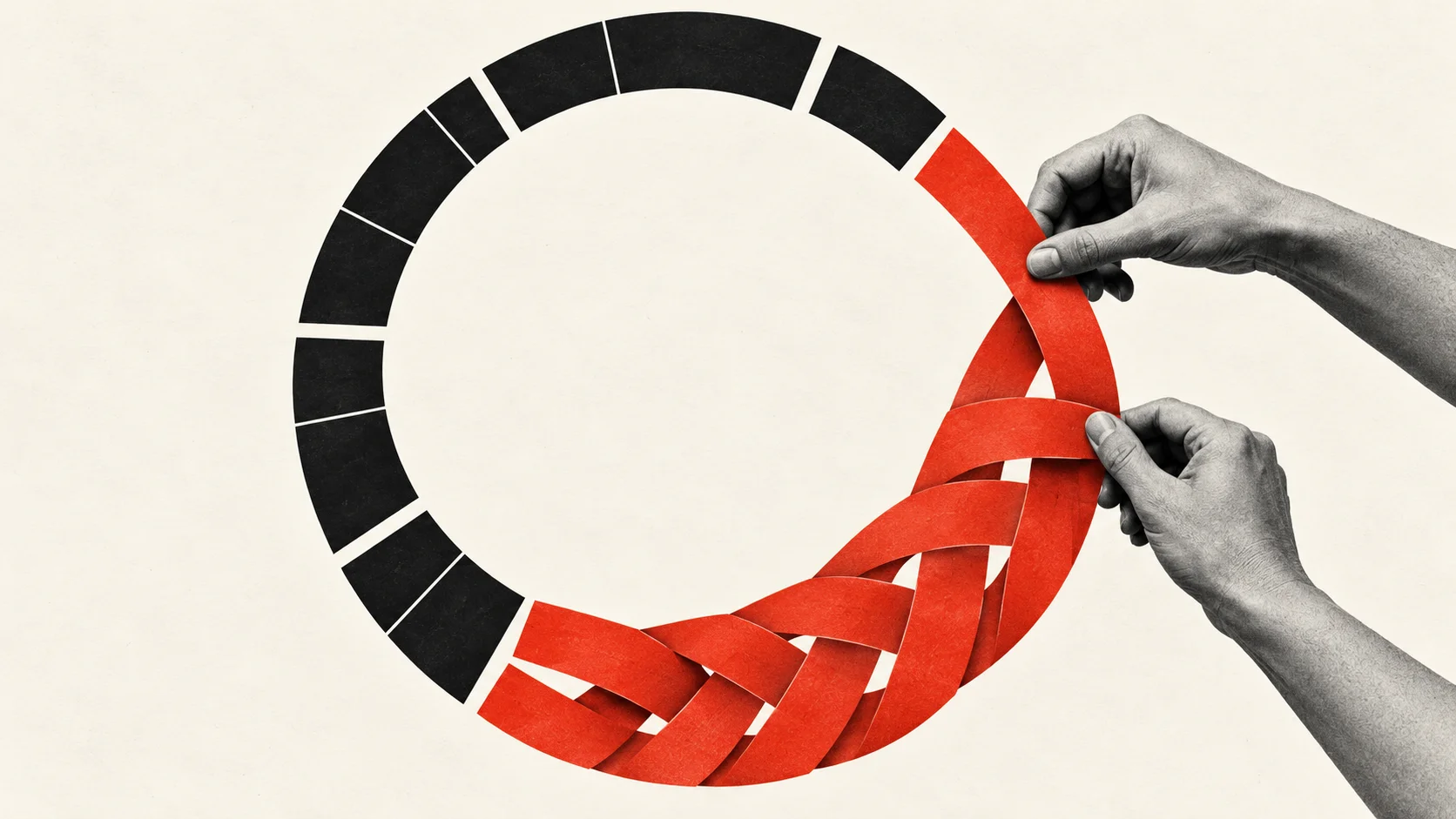
There is a cycle here:
Science → Engineering → Product → Art, Meaning, and Dignity → New Questions → Science
Science expands what we understand. Engineering turns understanding into practical capability. Products give that capability a form people can use. Then people interpret what has become possible, question what it is doing to them, and decide what deserves a place in their lives. Those experiences give rise to new questions, some of which become the starting point for another round of discovery.
Neri Oxman offered a close relative of this model in her Krebs Cycle of Creativity, connecting science, engineering, design, and art. Her framework describes how these activities feed one another. The question I want to follow is what happens when a society becomes very good at producing capability and struggles to give people a meaningful part in deciding what it is for.
These activities overlap. People made art long before modern science, and practical craft often developed ahead of scientific explanation. Dignity belongs to people throughout the cycle. It is an obligation we carry into the transformation.
What changes is the setting in which people try to exercise their imagination, find purpose, and live with one another.
Between each part of the cycle, possibility can accumulate faster than we learn to use it. I find it useful to call these gaps overhangs. They are the difference between what has become possible and what the next part of our world can absorb.
The first overhang sits between science and engineering.
Knowing why something should work leaves a great deal of work before anyone can depend on it. A promising result must survive different conditions. Materials must behave. Costs must come down. Someone has to discover what breaks after the thousandth repetition.
James Watt’s separate condenser is a useful reminder. The idea greatly improved the efficiency of the steam engine, but turning it into a practical industrial machine required years of work. The surviving models record that passage from insight to dependable machinery. The Science Museum’s account makes visible the effort hidden inside the familiar story of an invention.
AI has its own version of this gap. An impressive answer raises different questions from a dependable service. Under what conditions does it work? How do we recognize failure? What will it cost to check, repair, and operate? Engineering has to establish those boundaries.
That work deserves respect. Reliability is one of the ways we care for people who will never meet the person who designed the system.
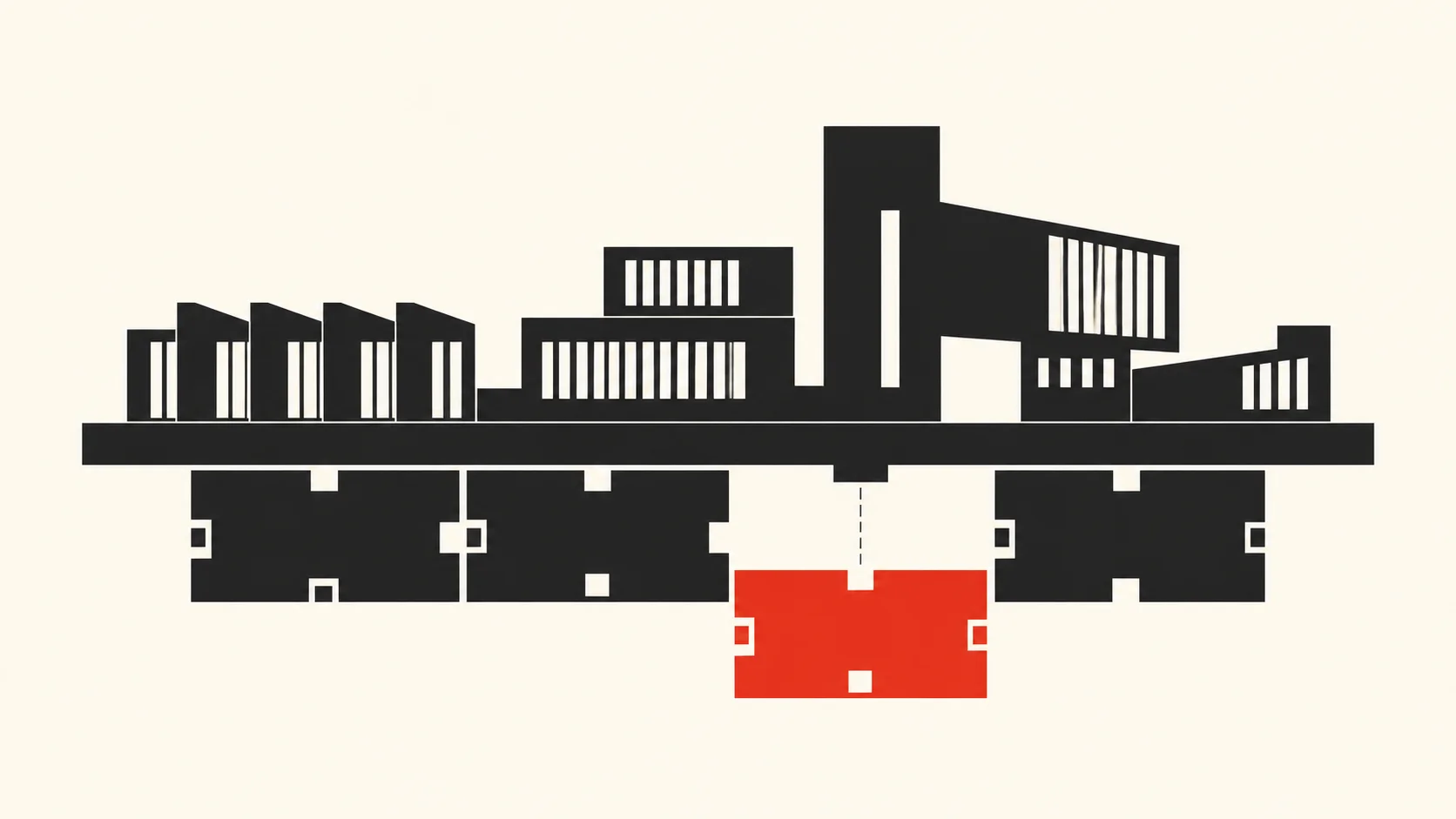
The second overhang sits between engineering and product.
A capability can work and still be difficult to use, maintain, obtain, or fit into ordinary life. By product, I mean the usable form of a capability: a tool, a service, an application, or shared infrastructure. Design connects what the machinery can do with what a person needs to accomplish.
Electrification shows how much can live inside this gap. Small electric motors allowed factory equipment to be arranged around the flow of work rather than the location of shafts and belts. Realizing that possibility involved changing the factory around the motor. Wiring, equipment, and working arrangements had to come together. The Smithsonian’s history of electrification follows those connections into both factories and homes.
I explored the organizational part of this problem in Beyond the Light Bulb. Giving people an AI tool can improve individual tasks while the larger process continues to wait for information, decisions, or permission. The tool has arrived. The organization is still learning how to make use of it.
Research on the Productivity J-Curve gives this a broader economic foundation. General-purpose technologies require complementary investments, including investments that are difficult to see in conventional accounts. Buying the visible technology is only part of the work.
But even successful adoption leaves the third overhang.
This is the gap between useful products and a culture in which people can find art, meaning, and dignity.
It is the gap that concerns me most.
Suppose a team establishes that AI allows it to complete the same accepted work with less effort. What happens to the recovered capacity? The organization might serve more people, improve quality, reduce prices, give employees time to learn, shorten working hours, reduce headcount, or increase returns to its owners. It might choose some combination.
The tool does not determine that decision. People with different interests must make it.
In When Output Becomes Abundant, I wrote about how a production bottleneck can move toward judgment, coordination, and trust. The same question reaches beyond the organization. Once we can make more, we still have to decide what is worth making, who benefits, and what happens to the people whose contribution has changed.
More capability gives us more choices. It also makes the choices we avoid more consequential.
This problem reaches much further back than AI.
Agriculture changed the possibilities of settlement, storage, and specialization. It also created recurring questions about who controlled a harvest and what obligations surrounded it. Archaeological research cautions against treating greater productivity as an automatic cause of greater inequality. The relationship depended on human action and institutions. The history is more varied than a single ladder of progress allows.
Writing and printing changed the possibilities of preserving, sharing, and disputing knowledge. Their cultural purposes also helped drive their development. In China, the reproduction of Buddhist texts and images helped advance printing, which later became a medium for artistic expression and social commentary. The Met’s history of the printed image shows belief, technique, commerce, and art developing through one another.
In sixteenth-century Europe, the printed anatomical illustrations in Vesalius’s On the Fabric of the Human Body brought observation, image-making, and medical education together. The book helped readers see the body differently, and its woodcuts also attracted an audience beyond medicine. Here the cycle was already moving in several directions at once. The Library of Congress describes that exchange.
The Industrial Age made the human consequences of these gaps especially difficult to ignore.
Factories could produce more while the people inside them worked under conditions that demanded reform. In Britain, campaigns, parliamentary investigations, legislation, and inspection all played a part in changing those conditions. The 1833 Factory Act placed limits on children’s work and established an inspectorate, although enforcement remained inadequate.
Those protections had to be argued for, organized, funded, and enforced.
The machinery did not contain a schedule for when its benefits would become a better childhood or a more humane working day.
William Morris approached industrial civilization from another direction. He asked what had happened to the relationship between making something and taking pleasure in making it. His concern included the finished object, the condition of its maker, and the possibility of beauty in ordinary life. In Art and Labour, he used art in a broad sense that reached into how people worked and experienced the world around them.
The Arts and Crafts movement made that relationship a public question. Its participants wanted objects with integrity and ways of producing them that left their makers connected to the work.
We can learn from that question without adopting every proposed answer. Returning to an earlier method does not by itself restore agency or make good work widely available. In A Letter to the Artisanal Software Craftsman, I argued that craft can travel into new methods through judgment, care, and responsibility.
That argument also creates an obligation for leaders. If we ask people to carry their craft into a new system, we owe them a voice in shaping it and a real opportunity to learn.
Electricity offers a quieter warning about the same overhang. Appliances reduced the effort of particular household tasks, yet the time spent on housework did not necessarily fall as expectations changed. A technical saving can be absorbed by a new standard of performance. The machine works better, and the person remains just as occupied. The Smithsonian records that tension in the history of domestic electrification.
Computing and networks brought another set of possibilities. People began forming communities through shared computer systems in the 1960s, long before today’s social platforms. Communication and belonging were part of what people wanted these machines to make possible. The Computer History Museum’s account follows that history from early messaging into online communities.
Across mechanization, steam, electricity, mass production, automobiles, and information technology, new capabilities have repeatedly required changes in the world around them. Carlota Perez’s work on technological revolutions places particular attention on the institutional choices that shape how widely their benefits spread.
That is the historical lesson I would carry into AI: the arrangements matter, and we can change them.
We currently occupy several overhangs at once. Some AI applications need better science. Others need more dependable engineering. Some useful tools still need better design, access, and support. Meanwhile, questions about livelihoods, participation, ownership, and purpose are already present.
We cannot postpone those questions until the technology is finished.
AI is also unusual in how visibly it works across the cycle. It is an object of scientific inquiry, an engineered system, a product people use, and a medium for expression. Researchers are examining whether it can also change the methods through which further inventions emerge. A 2026 economics paper argues that generative AI may function both as a general-purpose technology and as a change in the methods of invention.
That possibility makes the cultural questions more urgent. We need to help direct a process that may keep expanding what it can do.
Producing more images, songs, and stories is one part of that process. The art phase asks what people can express through these tools, what they come to notice, and whether their encounters with one another become richer.
A small experiment in short-story writing illustrates the tension. Access to AI-generated ideas improved how individual stories were evaluated, while the assisted stories became more similar to one another. The finding comes from a bounded writing task, but it gives us something concrete to consider: individual assistance and collective variety can move differently. Doshi and Hauser’s study leaves room for both the promise and the difficulty.
Art helps us attend to experience. A story can make a familiar arrangement seem strange enough to question. A song can give people language for something they felt but could not explain. Making something can become a way of discovering what we care about.
Meaning grows through relationships, purposes, and commitments. It includes being able to contribute and having some influence over what happens because we are there.
Dignity reaches deeper. A person’s claim to respect and a place among other people persists when the market stops purchasing a skill they spent years learning.
These belong together, but they are different needs. A beautiful cultural product does not establish that its makers were treated well. A full calendar does not establish that someone’s work has purpose. A new job title does not settle whether a person has any real influence.
In Beyond the Mirror, I argued for shared purpose, a living commons, coordinated autonomy, and shared gains. Those commitments become more demanding when we carry them from a team into society.
Who helps decide which work to automate? How can people question the decisions that affect their livelihood? What support exists while they learn something new? Where will recovered time appear in an actual human life?
Answering those questions is how we begin closing the third overhang.
That requires material conditions as well as encouraging language. People need security while roles change. Learning needs paid time and opportunities to practice. Workers and communities affected by automation need influence early enough to shape decisions. Shared gains need a visible form: better services, greater security, wider access, improved pay, or time people can direct themselves.
The cultural institutions around that life matter too. Libraries, schools, workshops, parks, and places where people gather give possibility somewhere to develop. Affordable access to useful tools matters. So does the freedom to make something without first proving that someone will buy it.
A person might use that freedom to write a novel, repair bicycles, care for a neighbor, grow vegetables, or become a little better at playing the piano. They should be able to discover what matters through living.
If we describe every recovered hour as spare capacity waiting for another assignment, we have already made a decision about what technology is for.
There is a fourth overhang, and it brings us around the cycle again.
People can notice a problem or imagine a possibility long before it receives sustained investigation. A community may understand that a service excludes it while lacking the resources to study an alternative. Someone doing the work may see a better question but have no route to the people authorized to pursue it.
Art changes what we notice. Meaning helps shape what we choose to pursue. Dignity broadens who gets to ask and whose experience deserves attention.
That is one way cultural life feeds discovery.
Some questions become experiments and research programs. Others remain questions of value that we must work through together. Science can inform a choice without making the choice for us.
In my earlier writing on the art of the possible, I worried about what happens when familiar constraints become the limits of our imagination. The cycle needs people who can recognize a constraint, understand it, and still ask whether we should build something different.
It also needs room for inquiry whose use is unclear. Art has value in the experience itself. Curiosity can be worth sustaining before it offers a commercial return. We should leave people enough freedom to follow a question beyond the point where its value fits neatly into a business case.
Years ago, writing about defending the commons, I used a garden to distinguish the community, the resource it tends, and the fruit it produces. The gardeners, the garden, and the harvest are different things.
AI may help us make the garden more productive. We still have to care for the people who tend it, decide how its fruit is shared, and leave room for something planted simply because someone hopes it will bloom.
That is the cultural transformation we must make a public goal. We need institutions in which greater capability becomes greater opportunity to learn, contribute, belong, and shape a life. We need to protect dignity while the work changes, and give art and meaning a place in the decisions that direct the change.
The light above the workbench can stay on all night.
We should build a world in which the person working there can finish, go home, and turn on another light over a table of their own. There might be a book waiting, a child with a question, or a drawing they have been meaning to begin.
We cannot know in advance what they will discover there. We can make sure they have a chance.

Comments
Join the discussion on Mastodon using your Fediverse account. Public replies known to the publishing server appear here.
Loading the discussion…