 Ted Tschopp
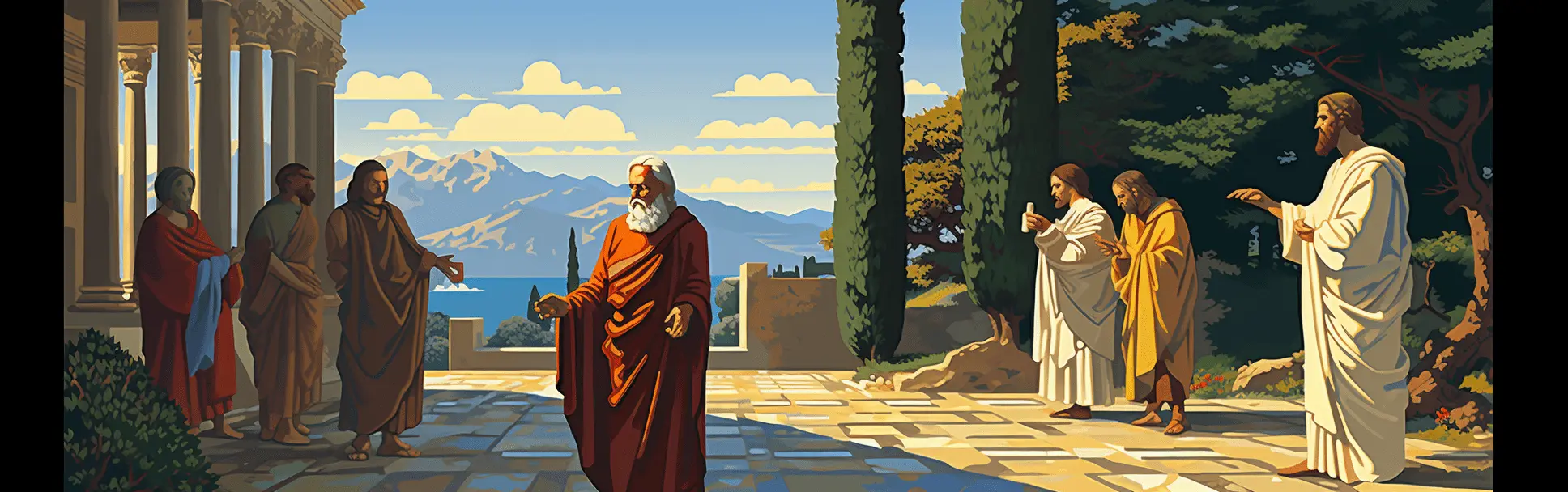
Sophocles was a playwright in fifth-century BCE Athens, whose tragedies explored the difficult choices people make when duty, loyalty, and power collide. Nearly 2,500 years later, those choices remain familiar. His play Antigone begins after a battle for Thebes. Antigone, the principal character’s two brothers have died fighting on opposite sides, and their uncle, King Creon, has ordered that one be denied burial. Antigone defies the king, believing her obligation to her brother outweighs the decree. The king condemns her to death. The Prince, Haemon, who is engaged to Antigone, comes to persuade his father to reconsider. Their conversation becomes an argument about leadership: whether a person in authority can listen, learn, and change a decision during changing times without looking weak and treating that accommodation as a surrender.
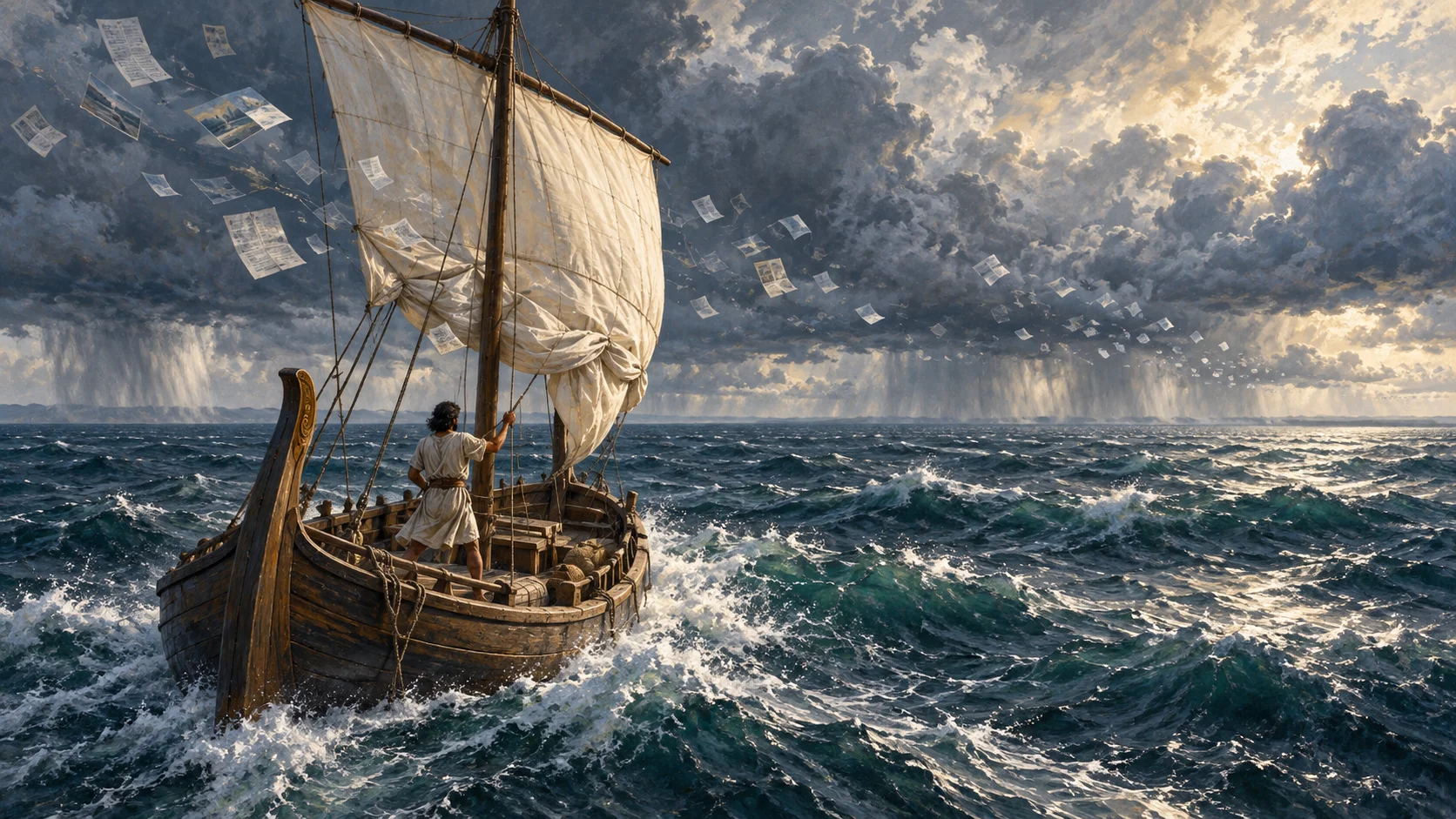
During the discussion Haemon offers the example of a sailor who keeps the sail pulled tight and refuses to loosen it, until the boat overturns. Experience and determination can only carry us so far when we refuse to adjust to the conditions around us. The wind does not become more agreeable because the person holding the ropes is certain they are right.
I think about that when I hear people describe what AI is bringing into our organizations. A storm of new code. A storm of patches. A storm of generated images, documents, and “AI slop” that someone still has to sort through. Calling these things storms carries an assumption: eventually, they will pass, we will catch up, and work will return to normal. But the ability to produce all of this faster and more cheaply will still be there when we finish today’s backlog. More code creates more maintenance obligations. More content creates more work deciding what deserves our attention and trust. These are becoming the conditions under which we work. We are preparing for a storm when we should be learning to operate in the new weather.
That means adapting the whole process. If we accelerate creation, we also need to improve how we review, test, patch, maintain, and retire what we create. We need to decide what is worth producing in the first place. Asking the same people to absorb an ever-growing volume through extraordinary effort is a poor plan for ordinary operations. Back in Antigone, Haemon asks his father, the king, to remain willing to learn. His sailor gives us something concrete to remember: keeping the boat on its journey requires adjusting the sail. We should build that adjustment into the way we work, because this weather is now part of the journey.
Keep this in mind when you are thinking if the chaos we are experiencing is a one time event or if this is just the weather. I believe that this isn’t a storm. This is now weather. This is just the normal we need to operate within, and like the sailor, the prince, and the king, we all need to adapt or we will definitely look weak, foolish, and unprepared for the conditions we face.