

A factory making phones, a voice calling a patient, and a robotic arm responding to a person’s intention are all being placed under the heading of AI. They have different purposes, different evidence, and different consequences for the people involved.
This week’s stories are useful when we resist collapsing those differences into one prediction about the future of work. The better question is what each system lets someone do, and what happens when it fails.
A Factory Automates Processes
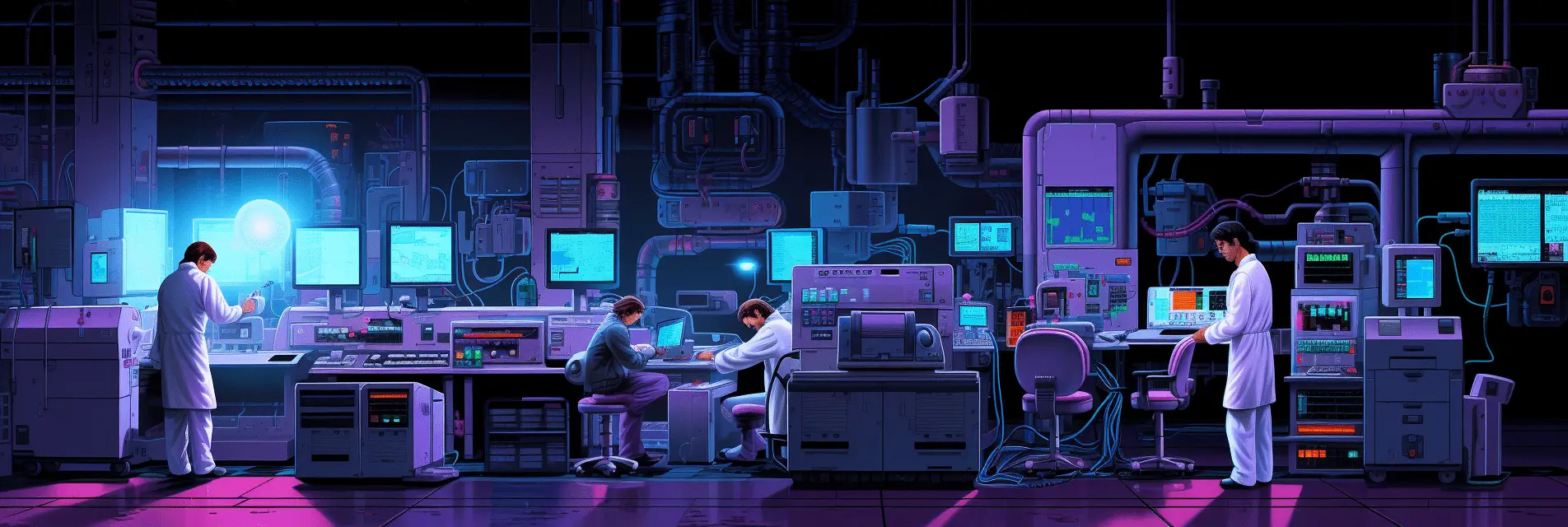
In its August 2024 results announcement, Xiaomi describes its Changping smart factory, launched that July, with an annual capacity of ten million flagship smartphones. The company reports full automation of key processes.
That is a significant manufacturing claim. It is also narrower than a claim that no humans are needed anywhere in the operation. Automated production still raises questions about maintenance, quality, supervision, and the work surrounding the factory. The announcement alone does not establish the net effect on jobs or the wages of displaced workers.
For an employer considering a comparable investment, the workforce question should be part of the proposal: which tasks change, which skills are needed afterward, and what happens to the people whose work is affected? Efficiency describes only part of the decision.
A Patient Call Is Not an Entire Care Relationship
Hippocratic AI’s March 18, 2024 description of Polaris proposes voice agents for non-diagnostic, patient-facing tasks. That supplies a more precise starting point than calling the software an “AI nurse.”
There may be value in helping people prepare for an appointment or follow established instructions. A claim about that value needs evidence from the actual task and population. A reassuring voice alone does not demonstrate safe care or reduced pressure on staff.
The practical questions follow from the boundary: what should the system do if the person is confused, reports something outside its instructions, or wants to speak with a clinician? A healthcare organization would need to define and test those routes with qualified staff. The technology’s warmth is not a substitute for that responsibility.
A Robotic Arm Extends a Person’s Ability
UCSF’s March 6 report describes a research participant with paralysis controlling a robotic arm through a brain-computer interface. The system uses an AI model to accommodate changes in brain signals and worked over seven months without adjustment, according to the researchers.
This is an example of technology helping someone act on an intention. It deserves attention on those terms. A research result with a participant does not establish routine availability, suitability for every patient, or a general restoration of independence.
It also complicates the usual replacement story. Here the meaningful result is an extension of the person’s ability to act. The person remains central to the task.
A Map Becomes Part of an AI Ambition
The March 12 announcement of Scopely’s agreement to acquire Niantic’s games business describes plans for a separate Niantic Spatial, focused on geospatial AI. At this point, it is an announced transaction and direction, subject to closing conditions.
The prospect of software interpreting physical places raises a different set of questions. What was collected? What did contributors understand about its use? Which places are well represented, and which are missing? How would a mistaken interpretation be found and corrected?
A map useful for one activity may be inadequate for another. The intended decision determines how precise, current, and complete its information must be.
Put the Human Question Into the Design
These examples do not support one simple conclusion about whether AI replaces or helps people. They show several kinds of change: automating a process, proposing a service, extending an individual’s physical control, and pursuing a new use for spatial information.
For the next AI proposal in your own organization, write down the task in a single sentence. Identify the evidence that it works, who benefits, who bears the cost of an error, and who can intervene. Then include the people affected in deciding whether the result is acceptable.
That is a practical place for the human edge: making the purpose and consequences of the work explicit enough that we can decide what should change.







Comments
Join the discussion on Mastodon using your Fediverse account. Public replies known to the publishing server appear here.
Loading the discussion…